

































The Gen-AI Frontier in Predictive Campus Safety
From Reactive Surveillance to Preventive Intelligence for Colleges & Universities
Campus safety can no longer be defined by cameras that document incidents after the fact. For colleges and universities, safety must protect students, faculty, staff, and institutional trust before a threat escalates into tragedy.
Traditional campus security systems remain fundamentally reactive. They record activity, trigger alarms, and generate reports but they do not understand behavior, intent, or escalation.
In an era shaped by Generative AI, simply deploying more cameras, access controls, or alerts increases complexity not protection.
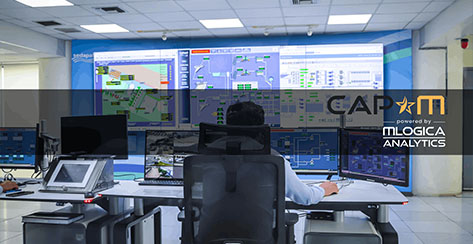
mLogica's CAP*M (Complex Events Analytics Platform) introduces a new operating model for campus safety one that transforms fragmented campus data into predictive intelligence, enabling intervention left of bang.
The Campus Safety Challenge Universities Face Today
Most campus security failures do not stem from a lack of infrastructure.
They stem from fragmentation.
Across a typical university environment:
- Surveillance systems operate independently from access control
- Student information systems are isolated from security operations
- Digital activity, residence hall access, and patrol data lack correlation
- Behavioral warning signs remain dispersed across departments
These silos create blind spots especially during pre-incident reconnaissance, insider threats, stalking behavior, and lone-actor escalation.
Manual monitoring cannot scale across thousands of students, multiple facilities, residence halls, events, and digital systems.
Campus safety requires intelligence that reasons not just observation that records.
CAP*M: Predictive Campus Safety Powered by Gen-AI
CAP*M is mLogica’s Gen-AI–powered Complex Events Analytics Platform, purpose-built to support the unique operational, ethical, and regulatory realities of higher education environments.
Unlike rule-based systems, CAP*M applies causal modeling and behavioral context to understand why activity is occurring not just what is happening.
The platform continuously synthesizes real-time data across the campus ecosystem to build a dynamic pattern of life, enabling earlier recognition of risk while preserving human oversight and due process.
Identifying Threats Before They Escalate
By correlating physical, digital, and behavioral signals, CAP*M enables universities to detect early indicators of campus risk, including:
- Repeated anomalous movement across academic buildings or residence halls
- Pre-operational reconnaissance near sensitive or high-traffic areas
- Behavioral deviations associated with insider or lone-actor threats
- Correlated access, video, and credential anomalies
- Gen-AI–assisted open-source intelligence across the digital campus perimeter
CAP*M does not assign guilt or automate enforcement.
It delivers contextual intelligence so campus leaders can act earlier, consistently, and defensibly.
Operating “Left of Bang” on Campus
CAP*M enables predictive resilience shifting campus safety from reaction to prevention.
Using a digital twin of the campus environment, CAP*M learns normal patterns of academic life: class transitions, residence hall activity, events, and seasonal rhythms.
When deviations emerge, the system identifies risk pathways, allowing campus security and leadership to intervene before escalation, not after harm.
This is campus safety operating left of bang.
Unified Command and Coordinated Campus Response
When a credible threat emerges, CAP*M provides a unified intelligence layer across campus operations.
The platform enables:
- Real-time intelligence sharing across campus police, security, and leadership
- Automated coordination of alerts and response workflows
- Elimination of manual triage and alert fatigue
- Faster, clearer decision-making under pressure
Human teams remain in control at every stage.
Gen-AI handles correlation, scale, and speed not judgment.
Digital Twins for Campus Preparedness and Training
CAP*M uses digital twin technology to help universities prepare for incidents without real-world risk.
Institutions can:
- Simulate threat scenarios across residence halls, classrooms, and event spaces
- Stress-test response protocols before incidents occur
- Train campus safety teams using realistic, data-driven scenarios
- Validate policies under evolving threat conditions
Preparedness becomes measurable, auditable, and continuously improving not theoretical.
Aligned with Federal Campus Safety Funding Priorities
Modern campus safety requires investment, but CAP*M is designed to align with national violence prevention and campus security priorities.
mLogica’s Gen-AI frameworks support objectives tied to DHS, FEMA, and federal campus safety grant programs, enabling universities to pursue non-dilutive funding for predictive security modernization.
Campus safety becomes a strategic, fundable capability, not an unfunded mandate.
Built for Higher Education Environments
CAP*M is purpose-built for complex academic ecosystems, including:
- Large public and private universities
- Residential campuses and commuter schools
- Research institutions and medical campuses
- Multi-campus university systems
The platform integrates seamlessly with existing campus infrastructure modern or legacy without disrupting academic operations.
From Surveillance to Institutional Responsibility
Universities carry a profound duty of care to protect lives, preserve trust, and uphold academic mission.
CAP*M represents a decisive shift from passive surveillance to predictive, Gen-AI–driven campus safety intelligence, enabling institutions to act earlier, respond faster, and defend decisions with confidence.
▶️ Watch the video
📖 Learn more about CAP*M for Campus Safety
🤝 Speak with mLogica About Your Campus Predictive Safety Roadmap
📖 Learn more about CAP*M capabilities by checking this case study.
- Share on