

































Distributed Workload Modernization

The mLogica Migration Team
Modernizing Sybase ASE & PowerBuilder Safely
Sybase ASE and PowerBuilder were foundational technologies for commercial and public-sector systems of record for decades. They enabled reliable transaction processing, rapid client/server development, and consistent delivery across large programs. Many public sector agencies still depend on these platforms to run revenue, justice, case management, licensing, and benefits of workloads, often with deep business logic embedded in stored procedures and thick-client user interfaces.
That same legacy strength has become a long-term operational liability. The risk is not theoretical; it is now structural. Vendor maintenance timelines are tightening, the ecosystem of skilled practitioners is shrinking, and the infrastructure patterns these stacks rely on are increasingly difficult to sustain. Even when systems appear stable, they can be one incident away from a high-impact outage: an unpatchable vulnerability, a failing server that cannot be replaced, a brittle deployment process, or a critical PowerBuilder component that only one retired contractor understands.
This is precisely where a distributed workload modernization approach matters: modernize the platform and delivery model without disrupting mission continuity, and without forcing a risky “rewrite from scratch” that trades known stability for multi-year uncertainty.
Why the Risk Curve Has Steepened
1) Support and maintenance constraints are compressing
Most agencies do not modernize because a database suddenly stops running; they modernize because operating it safely becomes impractical. As Sybase ASE approaches end-of-life realities for certain hardware platforms (HP and Solaris) and extended support options narrow, patch velocity and vendor focus tend to diminish. Over time, security posture degrades and compliance risk accumulates, even if day-to-day operations appear “fine.”
2) Infrastructure fragility is real
Legacy ASE deployments often depend on older OS versions, specific kernel settings, proprietary storage configurations, and aging virtualization patterns. Procuring replacement hardware for older footprints can be difficult; equally challenging is finding a modern equivalent that behaves the same way under load. As systems age, infrastructure risk becomes less about capacity and more about recoverability: can you rebuild quickly, securely, and correctly after an incident?
Cloud and modern VM guidance increasingly assume current architectures, consistent hypervisors, and repeatable automation. That is excellent news for modernization, but it magnifies the gap environments anchored to older patterns. And there’s a financial implication: ASE on cloud or modern virtualized hardware often requires more licensed cores than legacy on‑prem configurations, due to differences in CPU architecture, NUMA behavior, and how ASE scales under newer hypervisors. Without planning, customers can be surprised by higher licensing and infrastructure costs.
3) The workforce pipeline is shrinking
The workforce challenge is often the most urgent risk driver. Sybase DBAs, ASE administrators, and PowerBuilder developers are not being replenished at the rate agencies need. As senior staff retire and institutional knowledge dissipates, the mean time to diagnose and resolve issues increases, especially for complex stored procedure behavior, legacy error handling, and PowerBuilder UI event logic. The result is a predictable pattern: delays, fragile workarounds, and postponed security fixes that become audit findings.
What makes this more serious is the concentration of knowledge. In many environments, only one or two individuals truly understand the end-to-end behavior of the system. That creates single point of failure risk not just for operations, but for governance: when incident response, code interpretation, and compliance evidence all depend on a shrinking pool of experts, agencies face longer outages, higher operational costs, and increased exposure during audits.
The Good News: Modernization Does Not Require a Rewrite
A common misconception is that modernization must start with a full application to rewrite. The safest modernization programs preserve business logic while changing the execution substrate: the database engine, integration architecture, UI delivery model, and DevSecOps controls.
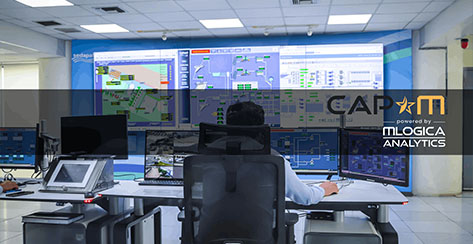
 At mLogica, we treat Sybase ASE and PowerBuilder modernization as an engineering conversion and validation problem, not a speculative redevelopment project. To accelerate this outcome, we leverage mLogica STAR*M, our automated, AI-powered migration and modernization platform. STAR*M analyzes schema, database code objects, and application dependencies to generate conversion-ready outputs with traceability, repeatability, and governance in mind. It automates large portions of ASE schema and stored procedure conversion, supports iterative re-runs as source systems evolve, and produces validation artifacts that simplify testing, audit review, and change control. Combined with parallel-run validation, STAR*M enables agencies to modernize faster while preserving correctness, minimizing downtime risk, and maintaining mission continuity.
The goal is to migrate deterministically, validate continuously, and cut over only when equivalence is proven
A practical modernization path typically includes four parallel tracks:
- Database migration (schema + code objects)
- Application and UI modernization
- Integration/API enablement
- Parallel-run validation and controlled cutover
This is how agencies modernize safely, without downtime surprises and without turning a critical system into a multi-year science project.
Track 1: Automated ASE Database Migration
Automated schema and code conversion
Modern platforms such as PostgreSQL, SQL Server, Amazon Aurora, and MariaDB can provide durability, scalability, and security capabilities that better align with cloud and compliance expectations. The highest-risk part of migration is not the schema; it is the database logic, stored procedures, triggers, functions, transaction semantics, and edge-case behaviors accumulated over years.
Automated conversion is effective when it is engineered rather than “best-effort.” That means:
- High-fidelity datatype mapping and constraint translation
- Stored procedure conversion with attention to control flow, exception handling, cursors, and temp table semantics
- Deterministic handling of differences in isolation levels and locking behavior
- Repeatable conversion pipelines so the target stays in sync during iterative testing
mLogica’s approach emphasizes automation with auditability: every converted object is traceable, diffable, and testable. That traceability is essential in public-sector environments where change of control and accountability are non-negotiable.
Performance and query behavior tuning
A converted database that compiles is different from a database that behaves correctly under mission load. Modernization must include:
- Baseline workload capture (peak vs. typical)
- Target platform indexing strategy and query plan review
- Batch job profiling, especially for end-of-month or seasonal cycles
- Platform-native observability and alerting
This is where modernization becomes “distributed workload modernization”: you are not simply swapping engines; you are re-platforming the runtime, tuning it for modern infrastructure, and building the monitoring discipline to keep it healthy.
Track 2: PowerBuilder Modernization Without Breaking the Business
PowerBuilder environments often face a familiar set of constraints: thick-client deployment friction, aging codebases, and a limited labor pool. A safe modernization strategy avoids a “big bang” UI rewrite. Instead, it uses automated analysis and staged refactoring to reduce risk while accelerating outcomes.
Automated analysis and refactoring
Start by extracting a precise inventory:
- DataWindows, SQL Logic and embedded expressions
- UI event flow and control dependencies
- External interfaces (files, queues, services, printers, authentication)
- Shared libraries, PBL structures and build/deploy pipelines
A key part of this analysis is understanding where business rules actually live. In many PowerBuilder applications, critical logic is embedded inside DataWindows—SQL statements, validation expressions, computed fields, and conditional formatting. Extracting this logic into service‑tier components is essential before any meaningful UI modernization can occur.
Once the inventory is complete, apply API-driven refactoring, so business operations become well-defined services. This decouples the UI from the database, stabilizes business logic, and reduces the blast radius of future changes.
Web-based UI replacement (incremental, not disruptive)
For many agencies, the strategic end state is browser-based access with modern identity controls, centralized logging, and improved accessibility. The safest approach is incremental replacement:
- Modernize one functional area at a time
- Keep APIs stable and versioned
- Preserve business rules while modernizing presentation
- Maintain operational continuity for users during transition
- Introduce modern identity (SSO, MFA, conditional access) as part of the new web tier
This staged approach prevents the common failure mode of UI rewrites: long timelines, shifting requirements, and stakeholder fatigue.
Track 3: API Enablement and Integration Modernization
Legacy environments often rely on point-to-point integrations and direct database access from multiple downstream applications. That design increases risk because any database change can ripple unpredictably across the enterprise.
Modernization is the opportunity to introduce a durable integration layer:
- APIs for core business capabilities
- Policy-based access controls
- Centralized logging and traceability
- Cleaner separation between systems of record and systems of engagement
For public-sector modernization, this step is also a governance win: it becomes easier to demonstrate who accessed what, when, and why, without relying on informal process controls.
Track 4: Parallel-Run Validation That Protects Mission Continuity
The cornerstone of “safe modernization” is proof, not optimism.
Parallel-run validation means the legacy and modernized stacks run side-by-side, processing the same inputs and producing comparable outputs. It allows agencies to:
- Confirm functional equivalence before cutover
- Measure performance under real workloads
- Identify edge cases (and fix them) without service disruption
- Plan cutover with confidence, not hope
In practice, parallel-run validation includes:
- Data reconciliation (row counts, checksums, referential integrity)
- Transaction-level comparisons for high-risk workflows
- Batch output equivalence (reports, extracts, eligibility runs)
- Controlled user acceptance testing with realistic scenarios
This method sharply reduces downtime risk because cutover becomes a planned operational event, not an emergency response.
SAP ASE, Cloud Edition on IBM Cloud as a Managed Landing Zone
For agencies that need near-term risk reduction while planning a broader platform transition, mLogica provides a pragmatic managed “lift-and-modernize” option: SAP ASE, cloud edition by IBM Cloud. This is a managed service offering of SAP ASE designed for deployment in the IBM Cloud, and it can serve as an interim modernization step when timelines, procurement constraints, or program dependencies make a full database engine migration difficult to execute immediately.
Migration from on-premises environments to this cloud edition can be performed through an encrypted backup-and-restore process, reducing exposure risk during data movement. A self-service cloud portal supports provisioning, configuration, and migration tasks, enabling secure and controlled data transfer with operational transparency. The cloud edition also includes cloud-specific security capabilities and is licensed by subscription using capacity units, which can simplify budgeting and align cost with actual use.
Importantly, SAP continues to provide product-level support for ASE, and IBM delivers the managed service and cloud platform operations. This coordinated model helps agencies maintain vendor support while they stabilize operations and plan for next-step modernization into cloud native architecture.
mLogica typically positions this managed ASE option as one of three strategic paths:
- Bridge strategy: move to managed ASE quickly to reduce infrastructure and support pressure, then migrate to PostgreSQL/SQL Server/Aurora/MariaDB when ready.
- Risk containment: maintain ASE compatibility while modernizing PowerBuilder and integrations first (API enablement), reducing coupling before an engine change.
- Program sequencing: when multiple systems depend on ASE, use the managed landing zone to standardize operations and improve resilience while staggered migrations occur.
The key is to treat the cloud edition as a deliberate waypoint, with clear exit criteria, not as a permanent holding pattern.
What a Safe Modernization Program Looks Like
A modernization program that succeeds in the public sector typically has these characteristics:
- A short assessment phase that produces an executable migration plan (scope, timeline, target architecture, risk register, RACI)
- Automation-first conversion to reduce manual error, accelerate repeatability and reduce downtime significantly
- Iterative testing with parallel runs to validate correctness continuously
- Security and compliance built in (identity, encryption, logging, patching)
- A measured cutover with rollback options and clear go/no-go criteria
- Continued support post go-live (knowledge transfer, managed services)
mLogica’s role is to bring the tooling, accelerators, and engineering discipline to modernize these workloads quickly, without jeopardizing mission delivery. The objective is straightforward: retire unsustainable technology risk while preserving the business outcomes these systems deliver every day.
De-Risk Now: Establish the Roadmap, Timeline, and Cutover Strategy
If you are supporting ASE and PowerBuilder in a mission-critical environment, the most important move is to replace uncertainty with a plan. A well-structured modernization roadmap will define timelines, dependencies, conversion feasibility, and the safest path to cutover. That path may mean a direct migration to a modern database platform, an incremental PowerBuilder-to-web transition, or a managed ASE landing zone to stabilize operations before delving deeper into modernization. The goal is always the same: reduce operational risk while creating a clear, defensible path to future-ready architecture.
The mLogica Migration Team
- Share on